A transparent model lets you watch what happens inside the anatomy. That's the whole point. Everything else in this guide is about how close you can get to that, and where the limits are.

Where transparency actually helps
- Device navigation. Seeing a catheter, guidewire or delivery system move through a vessel or chamber.
- Deployment checks. Watching how a stent, valve or implant sits and expands in a realistic geometry.
- Demos and pitches. Showing investors, clinicians or a trade-show audience what the device does, without a screen.
- Training and explanation. Making an internal structure readable to someone holding the model.
If nobody needs to look inside, an opaque model is usually the better choice. It's simpler, and the surface detail reads better.
How the transparency is made
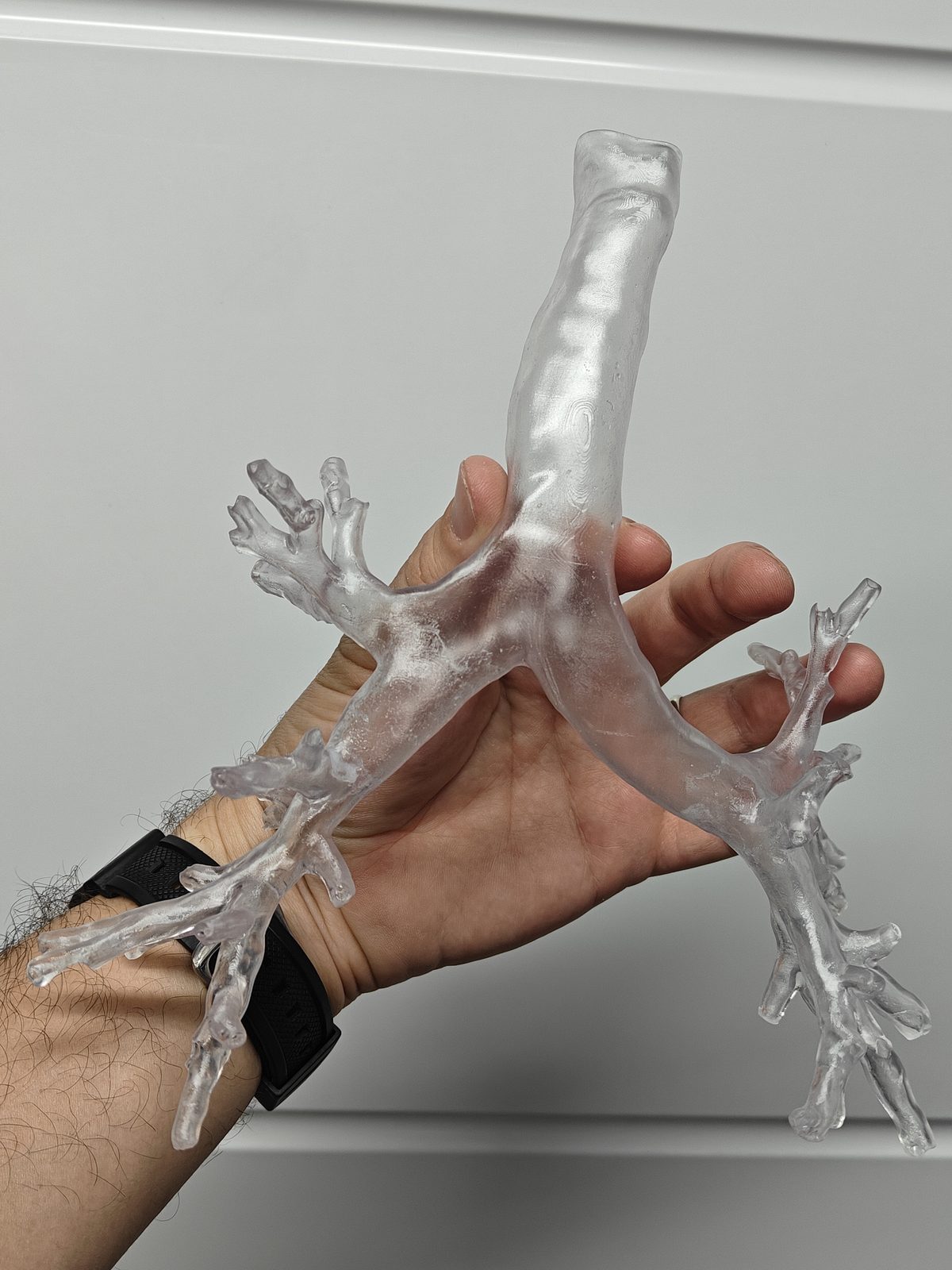
Most of my clear models are printed in SLA from a clear resin with a slight blue tint. I use a blue-based clear because it stays clearer over time than the yellow-based ones.
What surprises people is that the part changes look several times on the way:


The washing and cleaning that every resin print needs leaves the surface frosted. The final step is a dip in clear lacquer. It fills the microscopic roughness that scatters light, and the transparency comes back. For tubular parts like vessels or airways I dilute the lacquer, so it coats the inside as well.

Solid parts can also be sanded through fine grits for extra clarity. It's slow, patient work, and it can't reach inside a lumen.
The trade-offs
What you get
- A clear view of the lumen and of anything inside it
- The same patient geometry as an opaque print
- A rigid part that holds its shape for repeated use
What to expect
- See-through, not glass. Edges and curves still distort the view.
- Rigid. It doesn't feel or flex like tissue.
- More finishing time than an opaque model
Problems that come up
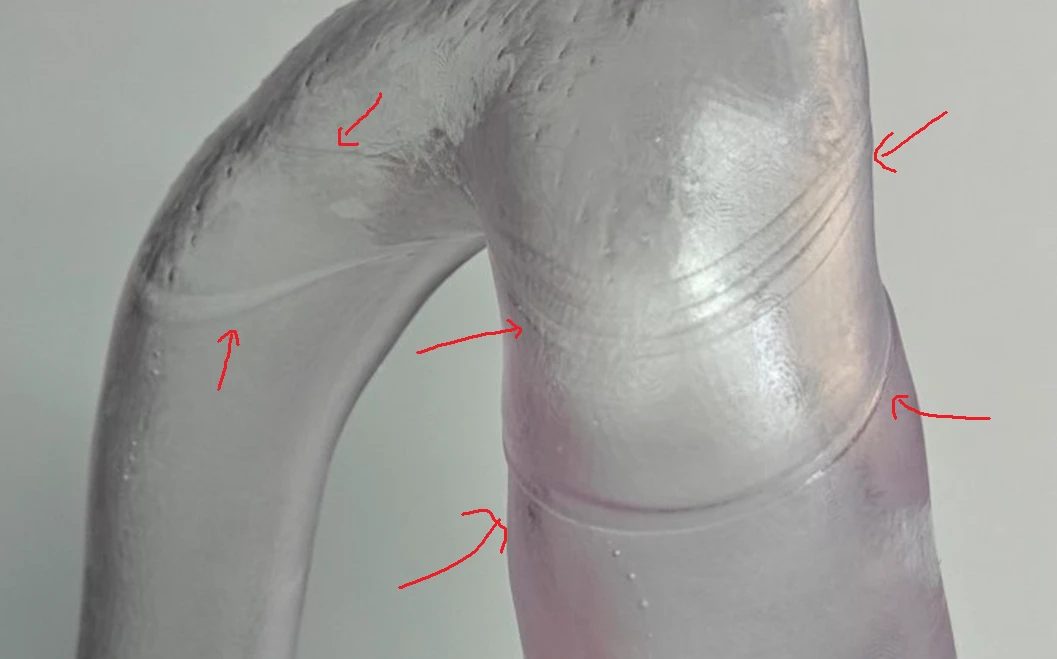
- Everything shows. Layer lines, rings and support marks are visible in a clear part in a way they never are in an opaque one.
- Hollow is harder than solid. You can't sand or polish the inside of a narrow lumen, so a hollow model is less predictable.
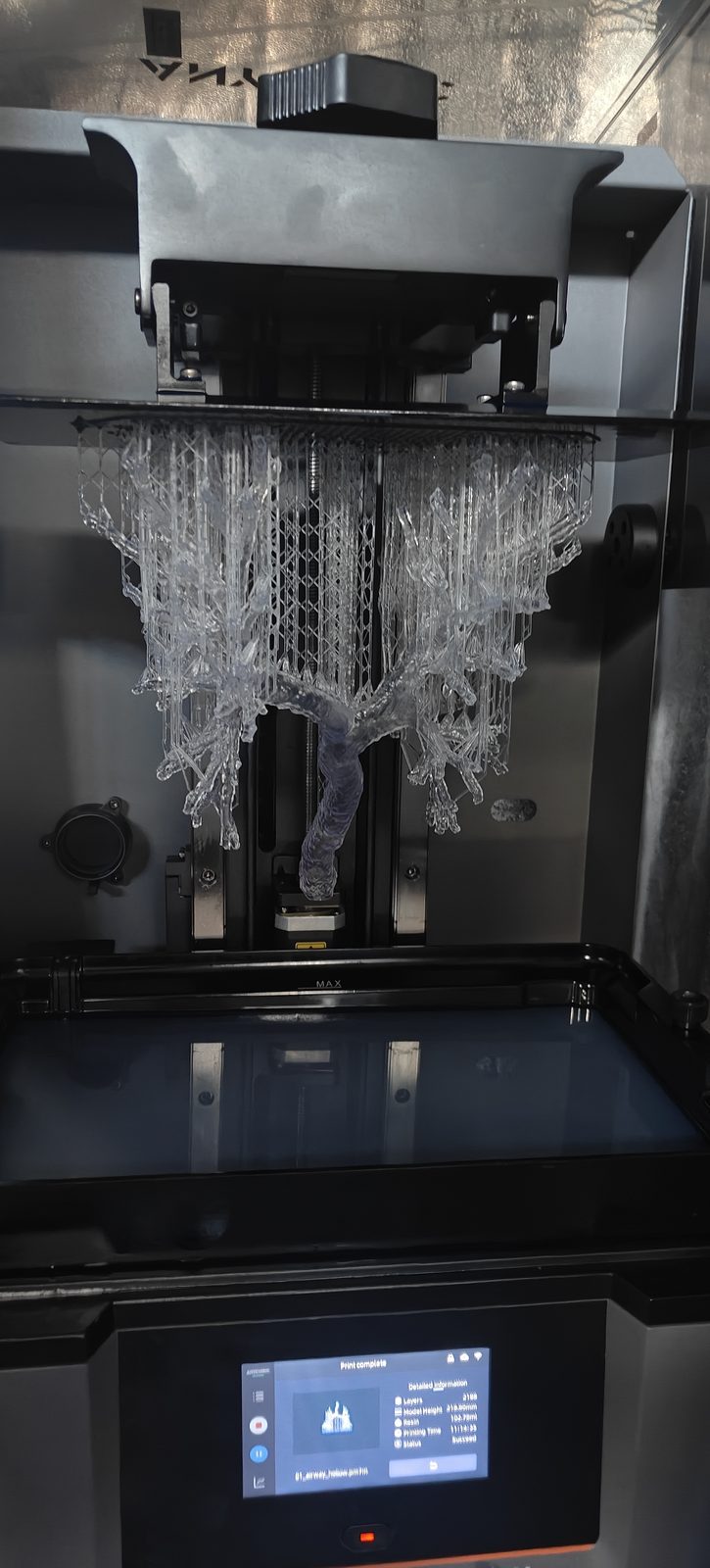
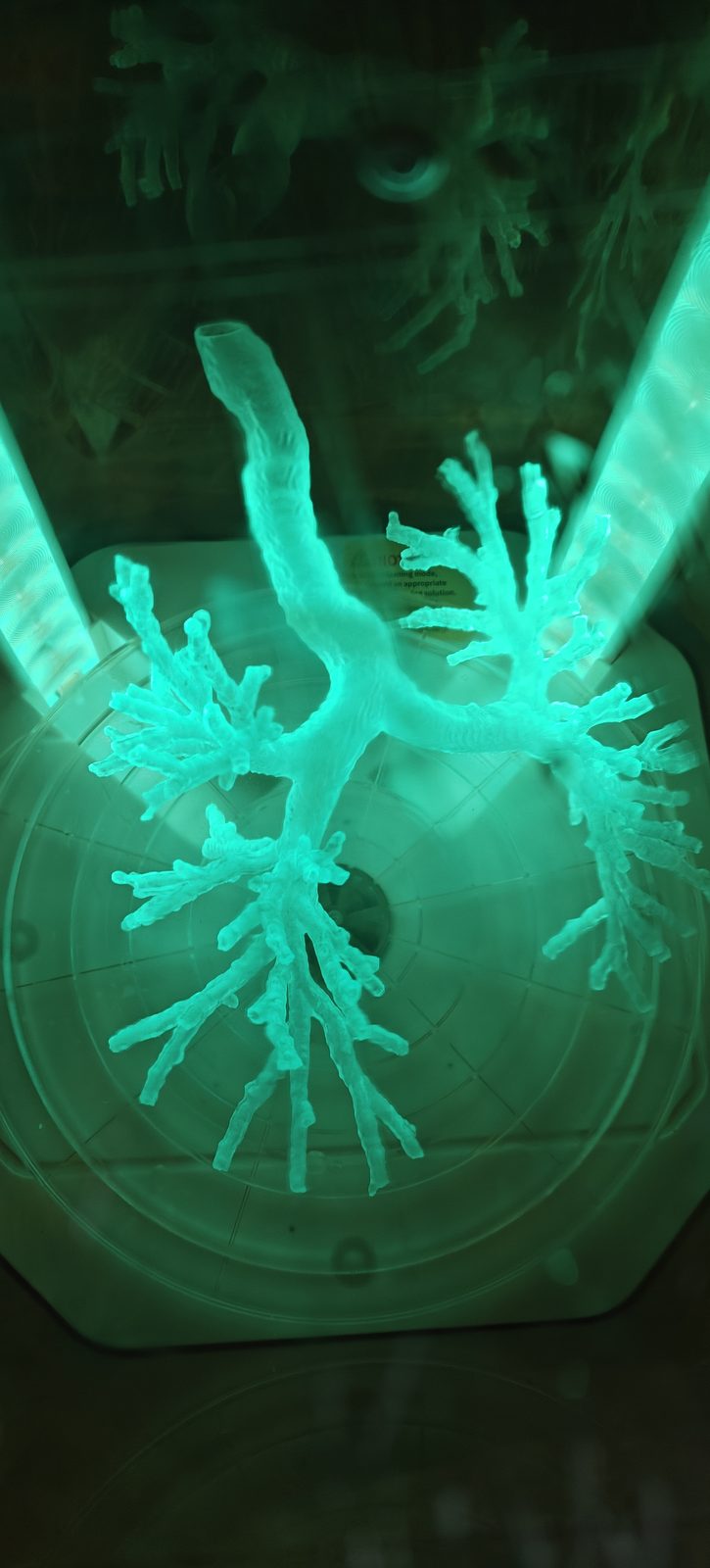
- Thin, long branches. They're delicate in clear resin and need careful orientation and support planning.
- Time. Most of the work happens after printing, in cleaning, support removal and finishing, and the finish has to be right everywhere because nothing hides a mistake.
"Optically clear" is a measurement, not a description
You'll see "optically clear" in a lot of resin marketing. In practice it means measured light transmission and haze, typically to ASTM D1003, on a flat test plate of known thickness. An anatomical part with curved, varying walls won't match a flat plate. So I describe my models as clear and see-through, and I don't claim an optical grade I haven't measured.
Before choosing transparent, ask what exactly you need to see, and from where. The answer decides whether clear is the right material at all.
For more on why a solid model can end up clearer than a hollow one, read Not All Transparent 3D Models Are Equal.